
Varicose veins
Varicose vein treatment
Vein ablation, sclerotherapy and phlebectomy
Varicose veins usually come from leaky valves in a larger leg vein that let blood flow backward and pool. Through a needle, I close that faulty vein from the inside with heat or a medical adhesive, then treat the visible veins with injections or tiny nicks. It is done in the office with numbing medicine, and you walk out and get back to normal activity the next day.
Who it's for
Vein treatment is usually worth considering if you:
- Have bulging varicose veins that ache, throb, feel heavy or itch
- Have leg swelling, night cramps or restless legs that get worse through the day
- Have skin darkening, thickening or a wound near the ankle
- Have had bleeding from a varicose vein or a painful clot in a surface vein
Who it may not be right for
Treatment depends on the ultrasound. If the veins aren't leaking, or the problem is mainly in the deep veins (for example after a blood clot, or from a blockage higher up such as May-Thurner syndrome), the plan is different. Treatment is usually postponed during pregnancy, since veins often improve after delivery. Before treatment, we do a detailed ultrasound standing up to map exactly which veins are leaking.
How it works
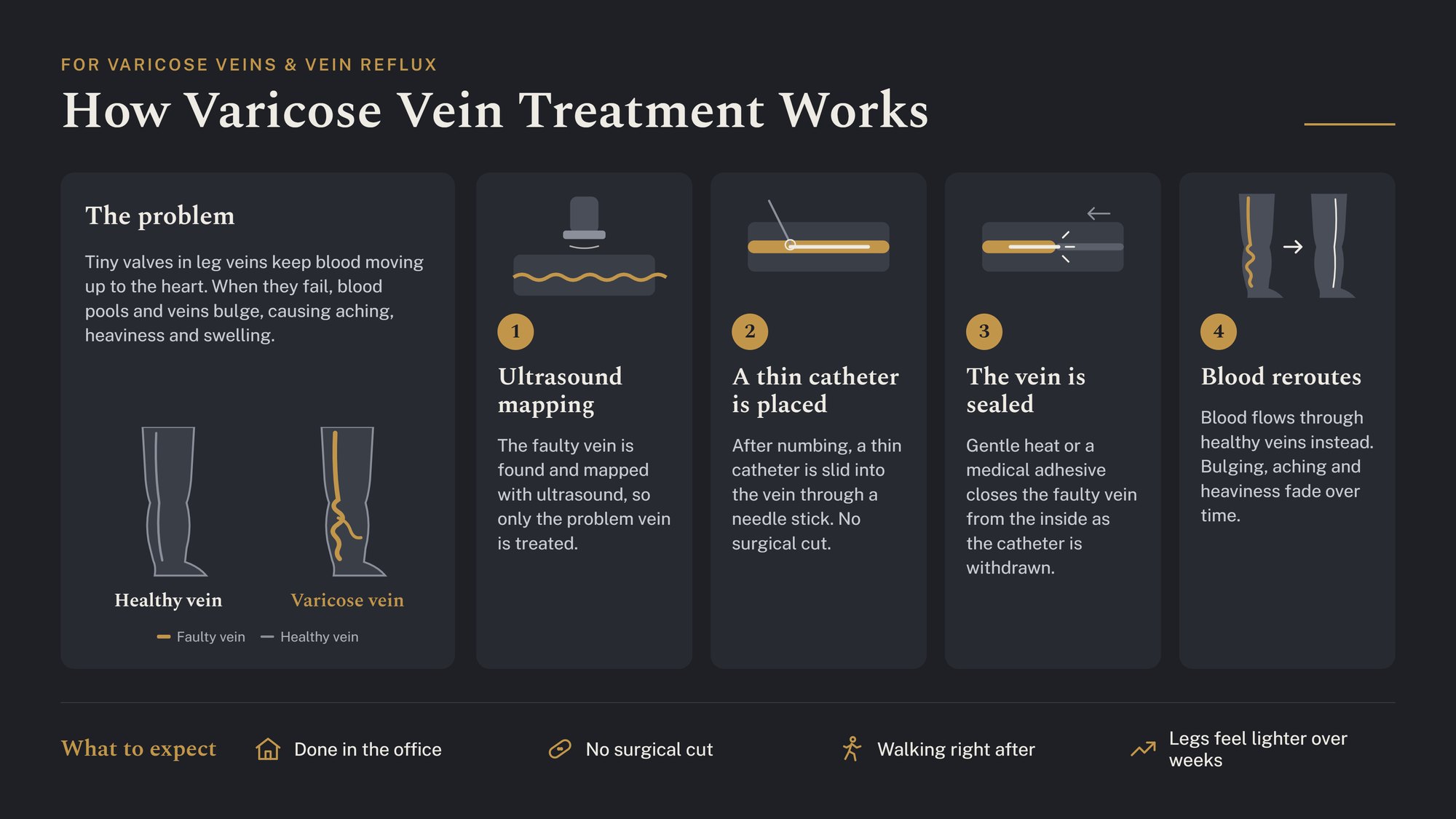
- We map the veins with ultrasound and mark the leg.
- I numb a small spot, usually near the knee or calf, and place a thin catheter into the faulty vein through a needle.
- After numbing along the vein, I close it from the inside with radiofrequency heat, laser or a medical adhesive.
- Remaining visible varicose veins are treated with sclerotherapy injections or removed through tiny nicks (phlebectomy), at the same visit or later.
Ablation usually takes under an hour, in the office, and you walk out afterward.
Treatment options compared
| Compression stockings | Vein ablation | Sclerotherapy | Vein stripping surgery | |
|---|---|---|---|---|
| What it does | Eases symptoms while worn | Closes the leaking main vein | Closes smaller varicose veins | Removes the main vein |
| Anesthesia | None | Local numbing | None | General or spinal |
| Where | Home | Office | Office | Operating room |
| Back to normal | Not applicable | Next day | Same day | 1–3 weeks |
| Fixes the cause | No | Yes | Partly | Yes |
Recovery
- Same day: You walk out of the office. Walking is encouraged right away.
- First week or two: Bruising and a tight, pulling feeling along the treated vein are common. Compression stockings may be recommended for a short time. Avoid heavy lifting and long hot baths for a few days.
- Follow-up ultrasound: Usually within a few days to make sure the vein closed and no clot extended into a deep vein.
- Weeks to months: Symptoms ease, and treated veins fade gradually.
Results and risks
National guidelines from the Society for Vascular Surgery, the American Venous Forum and the American Vein and Lymphatic Society recommend vein ablation over traditional stripping surgery for most people with leaking saphenous veins, because it is less painful and recovery is faster (Gloviczki et al., 2022; Gloviczki et al., 2023). For people with a venous leg wound, a randomized trial found that treating the leaking vein early healed wounds faster than compression alone, in a median of 56 days compared with 82 (Gohel et al., NEJM 2018).
Risks are uncommon and include bruising, temporary numbness of the skin near the treated vein, inflammation along the vein, and, rarely, a blood clot extending into a deep vein, which is why we check with ultrasound afterward.
Cost and insurance
Medicare and most commercial plans cover treatment of symptomatic varicose veins when an ultrasound shows reflux. Many require a trial of compression stockings first. Treatment of spider veins for appearance is usually not covered.
Common questions
Are varicose veins just cosmetic?
Not always. Varicose veins are often a sign that valves in the leg veins are leaking, which can cause aching, heaviness, swelling, cramps and itching. Over time it can lead to skin darkening and wounds near the ankle. Treating the leaking vein treats the cause.
If you close a vein, where does the blood go?
The vein being closed is already working poorly and sending blood the wrong way. Blood reroutes into the deep veins and other healthy veins, which carry most of the leg's blood anyway.
Does vein ablation hurt?
The leg is numbed along the vein before treatment. Most people feel some pressure and a few pinches. Afterward, a pulling or bruised feeling along the treated vein is common for a week or two.
Will the varicose veins come back?
Treated veins usually stay closed, but vein disease can progress, and new varicose veins can develop over the years. Some people need touch-up treatment later.
What about spider veins?
Spider veins are tiny surface veins. They are usually treated with sclerotherapy injections, which is generally considered cosmetic and not covered by insurance.
Is vein treatment covered by insurance?
Most plans, including Medicare, cover treatment of symptomatic varicose veins when an ultrasound shows reflux. Many require a trial of compression stockings first. Call 701-364-4010.
Next step
Call 701-364-4010 to set up a consultation at Vascular & Interventional Specialists of Fargo. If you've had a leg vein ultrasound, bring the report. Wear or bring your compression stockings if you have them.