
Arterial disease
Peripheral artery disease treatment
Angioplasty, stenting and atherectomy
Peripheral artery disease (PAD) is plaque narrowing or blocking the arteries to the legs. It causes pain with walking, pain at rest and wounds that won't heal, and it raises the risk of amputation. Through a pinhole, I open blocked arteries from the inside with balloons, stents or devices that remove plaque. Most people go home the same day.
Who it's for
A procedure is usually worth considering if you:
- Have leg pain with walking that still limits your daily life despite a walking program and medication
- Have pain in the foot or toes at rest, often at night and relieved by hanging the leg off the bed
- Have a wound on the foot or leg that won't heal, or toes that are turning dark
The last two are signs of chronic limb-threatening ischemia, which needs prompt attention to protect the leg. If you have a non-healing wound and diabetes, don't wait.
Who it may not be right for
Not everyone with PAD needs a procedure. If walking pain is mild or improving with exercise and medication, those remain the best treatment. Some blockages are better treated with bypass surgery. At our practice, interventional radiology and vascular surgery review cases together so you get the right approach.
How it works
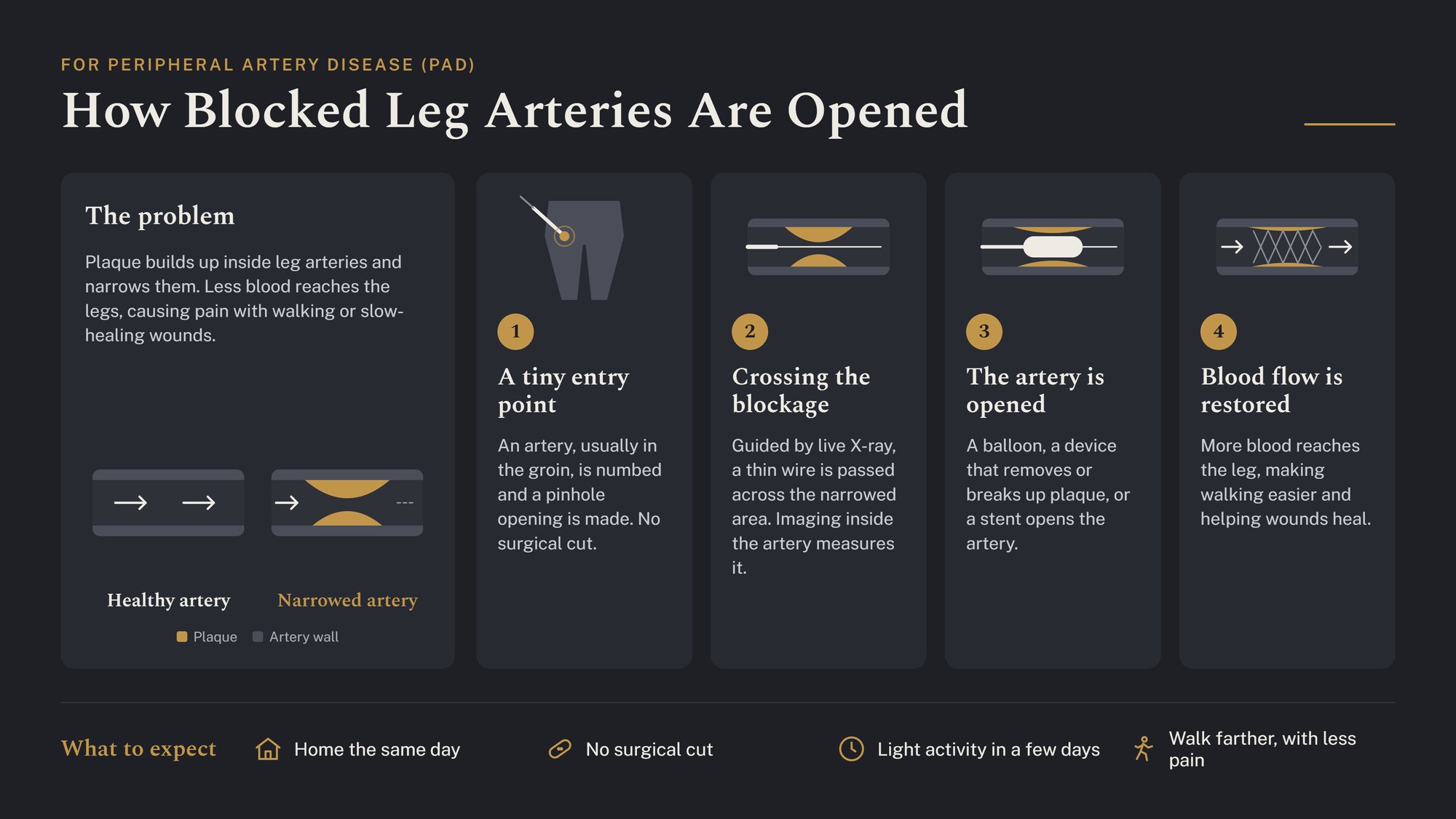
- I numb a spot over an artery, usually in the groin, sometimes in the wrist or lower leg, and place a thin tube.
- Using X-ray and dye, I map the arteries down to the foot. Ultrasound from inside the artery (IVUS) can show the size and type of plaque.
- I cross the narrowing with a wire and open it with a balloon, plaque removal (atherectomy), a device that cracks calcium, a stent, or a combination.
- We confirm blood is reaching the foot, then close the puncture.
Most procedures take one to two hours under light sedation.
Treatment options compared
| Walking program and medication | Endovascular treatment | Bypass surgery | |
|---|---|---|---|
| Incision | None | None (pinhole) | Leg incisions |
| Anesthesia | None | Light sedation | General or spinal |
| Hospital stay | None | Usually home same day | Several days |
| Back to normal | Not applicable | A few days | Several weeks |
| Best for | Everyone with PAD, and first step for walking pain | Many narrowings and blockages | Long blockages, or when a catheter approach fails |
Recovery
- Same day: You lie flat for a few hours to protect the puncture site, then most people go home.
- First week: Avoid heavy lifting. Walking is encouraged.
- Medications: Most people take aspirin or another blood thinner and a statin afterward, often long term.
- Follow-up: We check blood flow with an ultrasound or ankle pressures, and wound care continues if you have a wound.
What the guidelines say
The 2024 national guideline on PAD, written by the American College of Cardiology and the American Heart Association together with vascular surgery and interventional radiology societies, recommends that everyone with PAD stop smoking, take a statin and an antiplatelet or similar medication, and, for walking pain, start with a structured exercise program. It supports opening the arteries when walking pain still limits a person's life despite that treatment, and recommends prompt treatment to restore blood flow for chronic limb-threatening ischemia to prevent amputation (Gornik et al., JACC 2024).
Risks include bleeding or bruising at the puncture site, damage to the artery, a clot or debris traveling downstream, and kidney strain from the dye. Arteries can narrow again over time and sometimes need another treatment.
Cost and insurance
Medicare and most commercial plans cover treatment for symptomatic PAD. The clinic verifies your coverage before scheduling.
Common questions
What is peripheral artery disease (PAD)?
PAD is a buildup of plaque that narrows or blocks the arteries to the legs. The most common symptom is cramping or tiredness in the calves, thighs or buttocks when you walk that goes away with rest. In advanced cases it causes pain at rest, usually in the feet at night, or wounds that won't heal.
Do I need a procedure, or can exercise help?
For pain with walking, a structured walking program, quitting smoking and the right medications come first and help many people walk farther. A procedure makes sense when symptoms still limit your life despite that, or right away when there is pain at rest or a wound, because then the leg itself is at risk.
What is the difference between angioplasty, stenting and atherectomy?
Angioplasty opens the artery with a balloon. A stent is a small metal scaffold that holds it open. Atherectomy removes or shaves plaque, and other devices can crack hard calcium. Often a combination is used, chosen based on what the artery looks like from inside.
Will the artery narrow again?
It can. Narrowing can come back over months to years, especially in long blockages or below the knee. Medications, not smoking and follow-up ultrasounds help catch and prevent it.
Is PAD treatment covered by insurance?
Medicare and most plans cover testing and treatment for symptomatic PAD. Call 701-364-4010.
Next step
Call 701-364-4010 to set up a consultation at Vascular & Interventional Specialists of Fargo. Bring a list of your medications, any recent artery ultrasound or ankle-brachial index results, and, if you have a wound, the name of the clinic caring for it.