
Uterine fibroids and adenomyosis
Fibroid and adenomyosis treatment without hysterectomy
Uterine artery embolization (UAE), also called uterine fibroid embolization (UFE)
Uterine artery embolization (UAE), also called uterine fibroid embolization (UFE), treats fibroids and adenomyosis without removing the uterus. Through a pinhole in the wrist or groin, I block the blood supply to the fibroids or the adenomyosis so they shrink and soften. There is no incision, and most women are back to normal activity in one to two weeks.
Call 701-364-4010 to book a consultation
Who it's for
UAE is usually a good fit if you:
- Have heavy or long periods, clots, or anemia from fibroids or adenomyosis
- Have pelvic pressure, bloating, a visibly enlarged belly, or need to urinate often
- Have painful periods or cramping from adenomyosis
- Want to keep your uterus, or want to avoid surgery and a long recovery
- Haven't done well with hormonal treatment, or would rather not stay on it
Who it may not be right for
UAE isn't the right choice during pregnancy, with an active pelvic infection, or when cancer of the uterus or ovaries hasn't been ruled out. Some fibroid types, such as one hanging on a thin stalk, may be better treated another way. If you are hoping to get pregnant, we'll weigh UAE against myomectomy together with your gynecologist. Before treatment I review a pelvic MRI with you, which shows exactly what we are treating.
How it works
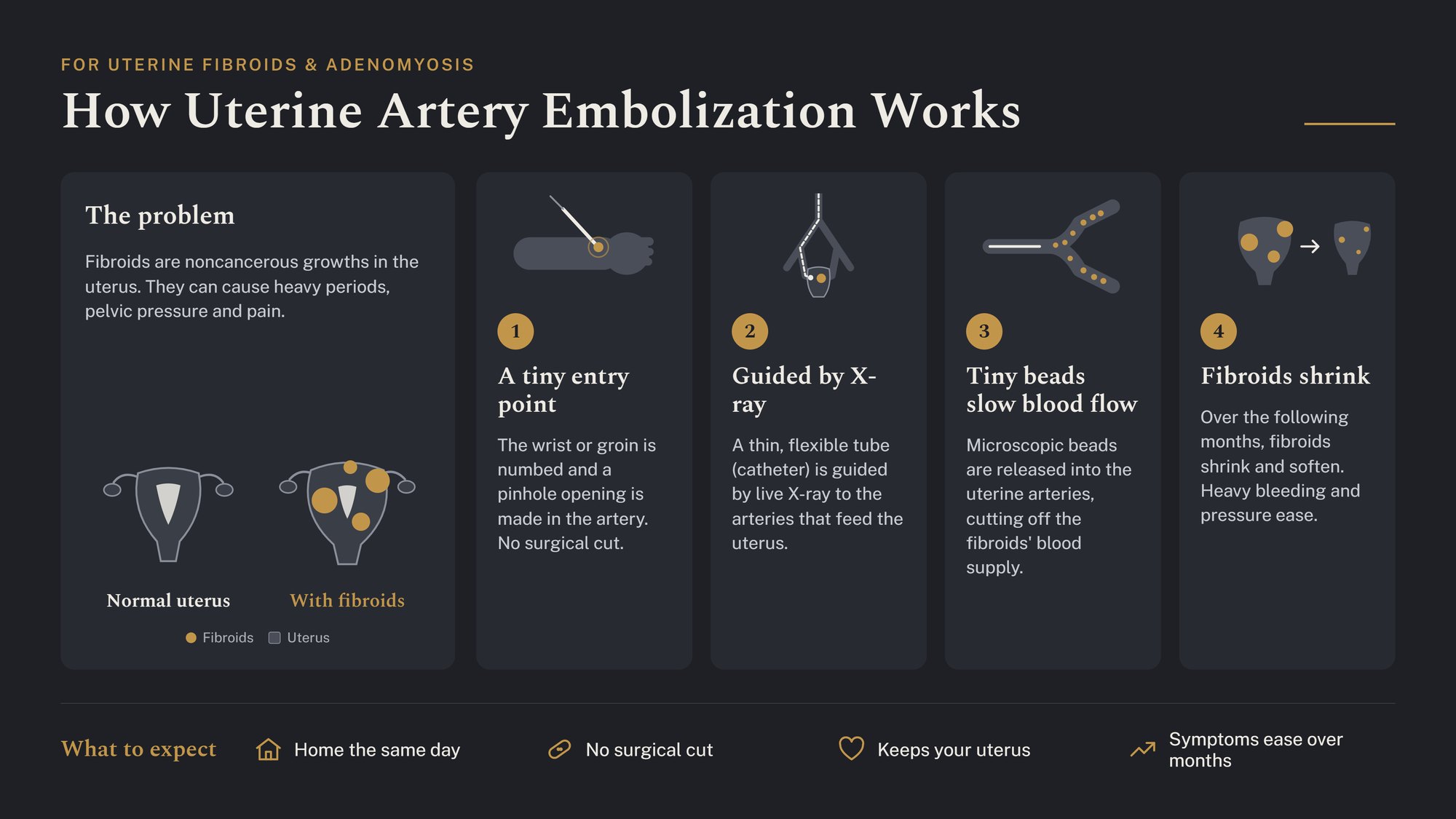
- I numb a spot on your wrist or groin and place a thin tube (catheter) into the artery.
- Using X-ray guidance, I steer it into the uterine artery on each side.
- I inject tiny particles that block the blood flow feeding the fibroids or the adenomyosis. The normal uterus keeps its blood supply from other vessels.
- Over the following weeks and months, the fibroids shrink and soften and bleeding eases.
The procedure usually takes about an hour. There is no incision and no stitches.
UAE compared with the alternatives
| Hormonal or medical treatment | Uterine artery embolization | Myomectomy | Hysterectomy | |
|---|---|---|---|---|
| Keeps the uterus | Yes | Yes | Yes | No |
| Incision | None | None (pinhole) | Abdominal, laparoscopic or through the cervix | Abdominal, laparoscopic or vaginal |
| Anesthesia | None | Light sedation | General | General |
| Hospital stay | None | Same day or overnight | Often 1–3 days | Often 1–3 days |
| Back to normal | Not applicable | About 1–2 weeks | About 2–6 weeks | About 4–6 weeks |
| Treats adenomyosis | Partly, while taken | Yes | Rarely | Yes |
| Chance of more treatment later | Symptoms return when stopped | Some women need more treatment | New fibroids are common | None |
Recovery
- First 1–3 days: Cramping is the main symptom, sometimes with nausea, tiredness or a low fever. This is expected and is managed with medication. You go home the same day or the next morning.
- First week: Most women rest at home and gradually get back on their feet.
- One to two weeks: Most women are back to work and normal activity.
- Three to six months: Bleeding and bulk symptoms keep improving as the fibroids shrink. We check in with a follow-up visit and often a repeat MRI.
Results and risks
In a randomized trial of 254 women comparing UAE with myomectomy, both treatments improved quality of life. Myomectomy scored somewhat higher at two years, and complications were similar (24% after UAE, 29% after myomectomy) (Manyonda et al., NEJM 2020). By four years the quality-of-life difference was no longer significant, and both reduced heavy bleeding equally (Sirkeci et al., Int J Gynaecol Obstet 2023).
In another randomized trial, the uterus kept shrinking for years after UAE, falling from an average of about 670 mL to about 290 mL at five years. New fibroids appeared in 7% of women after UAE compared with 60% of the smaller group who had myomectomy (Ananthakrishnan et al., CVIR 2013). For adenomyosis, pooled studies found symptom improvement in about 83% of women (de Bruijn et al., JVIR 2017).
Possible risks include infection, passing a piece of fibroid tissue, early menopause (mostly in women over 45), and the need for more treatment later. Wrist access appears as safe as groin access, with a trend toward fewer minor bruising problems (Sami et al., 2025).
Cost and insurance
Medicare and most commercial plans cover UAE for symptomatic fibroids. Coverage for adenomyosis varies more by plan. The clinic verifies your coverage and gives you an estimate of your share before you schedule.
Common questions
Doesn't my uterus need its blood supply?
I'm putting the fibroids on a diet. Fibroids and adenomyosis depend on a rich blood supply, and the tiny particles cut off their oxygen and nutrition so they shrink and soften. The normal uterus is more resilient and gets blood from other small vessels, so it recovers while the fibroids die back.
Is uterine artery embolization major surgery?
No. There is no incision and no general anesthesia. It is done through a small tube placed in an artery at the wrist or groin, under light sedation. Most women go home the same day or the next morning.
Does it work for adenomyosis, not just fibroids?
Yes. Pooled studies of women with adenomyosis found that about 8 in 10 reported their symptoms improved after embolization. Adenomyosis can be harder to treat than fibroids, so we look closely at your MRI first.
What is my first period like afterward?
It varies. Many women notice their next period is lighter. Some have an irregular cycle for a month or two. Heavy bleeding usually improves over the first few cycles as the fibroids shrink.
Can I still get pregnant after UAE?
Pregnancy after UAE is possible, and in one large trial some women conceived after either embolization or myomectomy. If pregnancy is a priority, myomectomy is often the first choice, and I will talk it through with you and your gynecologist.
Will it put me into menopause?
Usually not. The risk of early menopause is low, and is mostly seen in women already in their mid-to-late 40s who were close to menopause.
Is UAE covered by insurance?
Medicare and most commercial plans cover UAE for symptomatic fibroids. The clinic checks your benefits and gives you an estimate before you schedule. Call 701-364-4010.
Next step
Call 701-364-4010 to set up a consultation at Vascular & Interventional Specialists of Fargo. If you've had a pelvic ultrasound or MRI, bring the report or let us know where it was done.