
Pelvic venous disorders
Pelvic congestion and May-Thurner syndrome treatment
Pelvic vein embolization and iliac vein stenting
Pelvic venous disorders are problems with the veins in the pelvis: veins that are stretched and backed up (pelvic congestion syndrome), or a main vein that is squeezed shut (May-Thurner syndrome). They cause pelvic pain, leg swelling and varicose veins, and are often missed for years. Through a pinhole, I close the faulty veins or open the squeezed one with a stent, and most people go home the same day.
Who it's for
Pelvic congestion syndrome
- Dull, aching pelvic pain or heaviness for six months or more
- Pain worse with standing, at the end of the day, before or during periods, or after sex
- Varicose veins on the vulva, buttocks or upper inner thighs, or leg varicose veins that keep coming back
- Other causes such as endometriosis have been looked for, or symptoms continued after treating them
May-Thurner syndrome
- Swelling, heaviness or aching in one leg, usually the left
- A blood clot in the leg, especially the left leg
- Skin changes or wounds near the ankle from vein pressure
Who it may not be right for
Not every enlarged pelvic vein causes symptoms, and pelvic pain has many causes. Treatment makes sense when imaging shows a vein problem that matches your symptoms. Embolization isn't done during pregnancy. Before treatment I review your history and imaging, often with a dedicated venous ultrasound or CT or MR venogram, and I work with your gynecologist or primary care provider when other causes need to be ruled out.
How it works
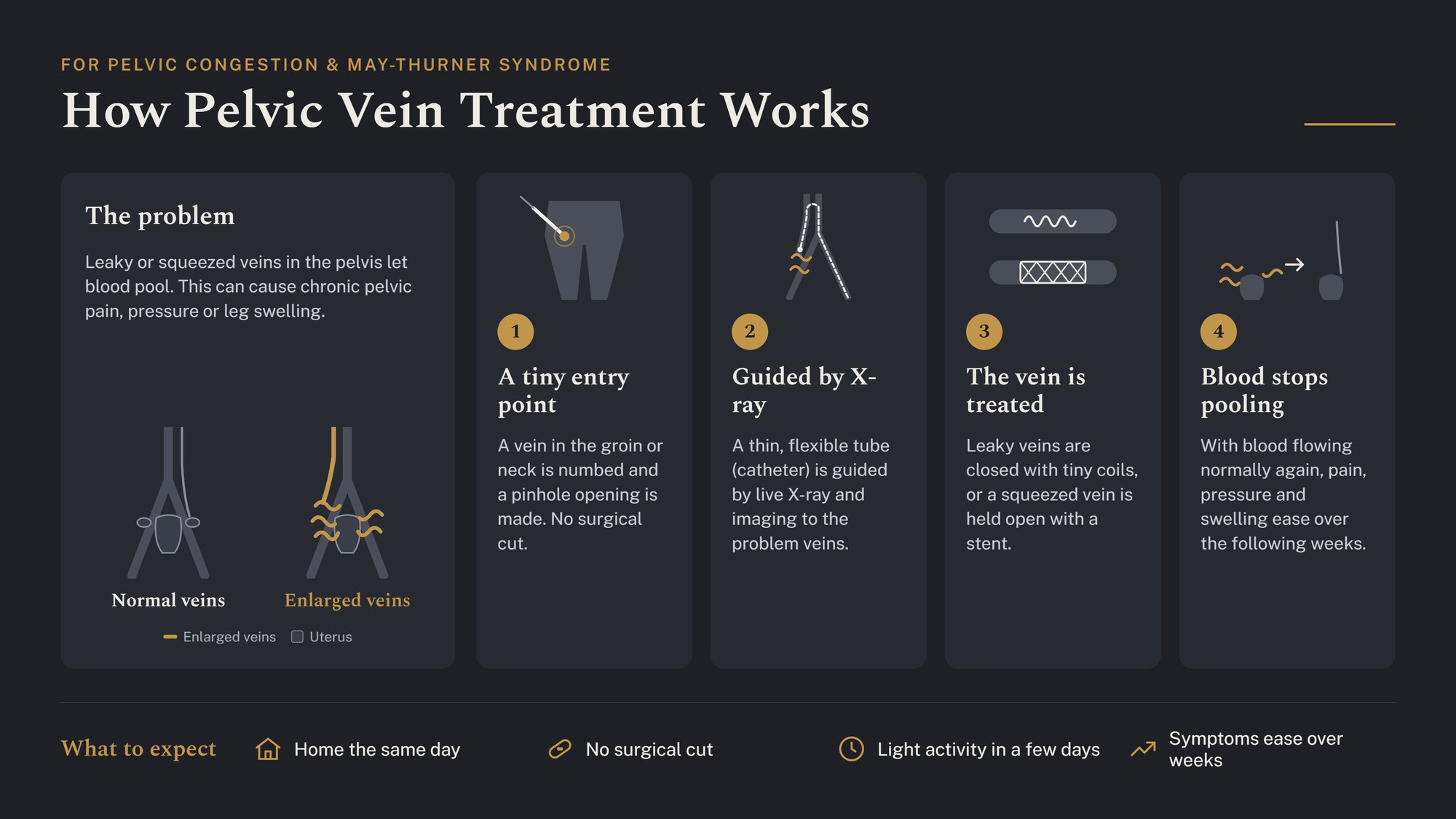
Pelvic vein embolization
- I numb a spot over a vein in the neck and place a thin tube (catheter).
- Using X-ray guidance, I map the veins draining the ovaries and pelvis and find the ones flowing backward.
- I close those veins from the inside with small coils, plugs or a medicine that seals the vein. Blood reroutes through healthy veins.
Iliac vein stenting
- I numb a spot in the groin and place a catheter into the vein.
- An ultrasound probe inside the vein (intravascular ultrasound) shows exactly where and how tightly it is squeezed.
- I open the narrowed segment with a balloon and place a stent to hold it open.
Each procedure usually takes one to two hours, under light sedation, with no incision.
Recovery
- Same day: Most people go home the same day after a few hours of rest.
- First week: Pelvic or back aching is common after embolization and is managed with anti-inflammatory medication. After stenting, some people feel back or hip discomfort for a few days.
- Blood thinners: After a stent, you take a blood thinner for a period of time to protect it. We'll go over exactly which and for how long.
- Follow-up: Pain often improves over weeks to a few months. Stents are checked with ultrasound.
Results and risks
Across 28 studies and nearly 2,700 women treated for pelvic venous insufficiency, embolization succeeded technically in 99–100% of cases and lowered pain scores by about 5 to 6 points on a 10-point scale. Clinical success ranged from about 68% to 100% depending on the technique, and complications were uncommon, the most frequent being movement of a coil out of place (Strobl et al., J Vasc Surg Venous Lymphat Disord 2026).
For iliac vein compression without a past clot, stents stay open in about 95–100% of patients at one year in device trials. They stay open less often when there has been a previous clot (Aimanan et al., Phlebology 2026; Li et al., 2025). Risks include bleeding at the access site, a clot in the stent, and, rarely, the stent shifting.
Cost and insurance
Most plans cover these treatments when imaging confirms a vein problem that explains your symptoms. Many require prior authorization, which the clinic handles before scheduling.
Common questions
What is pelvic congestion syndrome?
It is chronic pelvic pain caused by enlarged, backed-up veins around the ovaries and uterus. The pain is often a dull ache or heaviness that gets worse with standing, at the end of the day, during periods or after sex. It is now usually grouped under the broader name pelvic venous disorders.
What is May-Thurner syndrome?
In May-Thurner syndrome, the main vein draining the left leg is squeezed between an artery and the spine. It can cause swelling of the left leg, leg pain or heaviness, varicose veins, or a blood clot in the leg (DVT).
Why has this been missed for years?
The veins often look normal on a standard ultrasound or CT done lying down, and the symptoms overlap with endometriosis, IBS and other conditions. Many women see several doctors before anyone looks at the veins. Dedicated venous imaging usually answers the question.
Can men have pelvic venous disorders?
Yes. May-Thurner syndrome affects men too, and in men backed-up pelvic veins can show up as a varicocele. The same imaging and treatments apply.
Will treatment affect my fertility or periods?
Embolization of the ovarian veins is not expected to affect fertility or hormone levels, because the ovaries keep their normal blood supply from their arteries. If you are planning a pregnancy, we will talk through timing.
Is treatment covered by insurance?
Most plans cover pelvic vein embolization and iliac vein stenting when imaging confirms the problem and symptoms fit, though many require prior authorization. Call 701-364-4010.
Next step
Call 701-364-4010 to set up a consultation at Vascular & Interventional Specialists of Fargo. Bring any pelvic ultrasound, CT or MRI reports, and a list of the doctors and treatments you've already seen for these symptoms.