
Thyroid nodules
Thyroid nodule treatment without surgery
Radiofrequency ablation (RFA)
Radiofrequency ablation shrinks benign thyroid nodules with heat delivered through a thin needle under ultrasound guidance. There is no incision or scar, most of the thyroid is left untouched, and you go home the same day. The nodule keeps shrinking over the following year.
Who it's for
RFA is usually a good fit if you:
- Have a thyroid nodule that biopsies have shown to be benign
- Have trouble swallowing, pressure or a lump feeling in the neck, or a nodule you can see
- Have a nodule that is growing on ultrasound
- Have a "hot" nodule making too much thyroid hormone, in selected cases
- Want to avoid surgery, a neck scar or lifelong thyroid medication
Who it may not be right for
RFA isn't the first choice for a nodule that is cancer or has suspicious biopsy results, or for a goiter made of many nodules that extends down into the chest. Very large nodules often need more than one session. Before treatment I review your ultrasound and biopsy results, and in most cases a second benign biopsy is recommended before ablation.
How it works
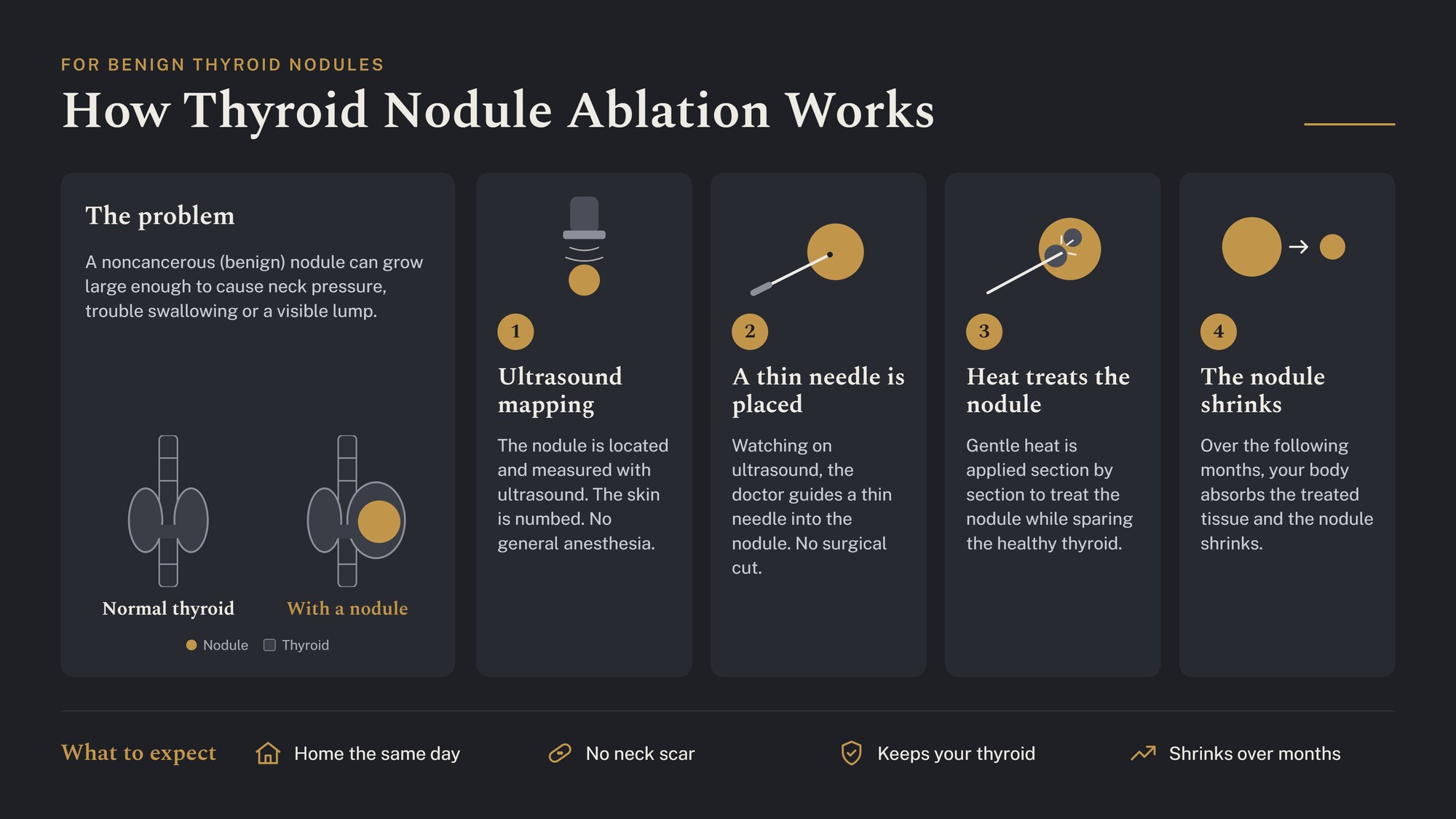
- Your neck is cleaned and numbed. You are awake, and some people take a mild sedative.
- Using ultrasound, I guide a thin electrode needle into the nodule.
- The needle tip heats the nodule tissue in small sections while I move it through the nodule. Fluid can be placed around the thyroid to protect nearby nerves and structures.
- Over the following months, your body clears the treated tissue and the nodule shrinks.
The procedure usually takes 30 to 60 minutes. There is no incision and no stitches.
RFA compared with the alternatives
| Watchful waiting | Radiofrequency ablation | Thyroid surgery | |
|---|---|---|---|
| Incision | None | None (needle) | Neck incision |
| Anesthesia | None | Local, sometimes light sedation | General |
| Hospital stay | None | Home same day | Same day or overnight |
| Back to normal | Not applicable | A day or two | About 1–2 weeks |
| Thyroid medication afterward | No | Rarely | Common, lifelong after removing the whole gland |
| Relieves symptoms | No | Yes, gradually | Yes, right away |
Recovery
- Same day: You rest for about an hour with an ice pack on your neck, then go home.
- First few days: Mild soreness or swelling in the neck is common. Most people are back to work the next day.
- First few months: The nodule softens and shrinks. Pressure and swallowing symptoms often ease within weeks.
- Follow-up: We check the nodule with ultrasound, usually within a few months and again at a year.
Results and risks
Across 29 studies and more than 3,000 benign nodules, nodule volume fell by an average of about 62% at three months, 70% at six months and 78% at one year after RFA (Wolde Sellasie et al., Eur J Radiol 2025). In studies following patients for three years or more, the reduction held at about 80% for RFA, and about 7% of nodules treated with thermal ablation regrew enough to be noticed (Zhao et al., Eur Radiol 2025). In a U.S. clinic reporting routine care, 78% of patients said their symptoms had resolved six months later (Mai et al., AJNR 2026).
Major complications occurred in about 2% of patients across long-term studies. The most important is a temporary change in voice from irritation of the nerve to the voice box, which usually recovers. Bleeding around the thyroid and a burn to the skin are uncommon. Larger nodules shrink less and are more likely to need a second session.
Cost and insurance
Coverage for thyroid RFA varies by insurer, and some plans still consider it investigational. The clinic checks your benefits and gives you a clear estimate before you decide.
Common questions
Will I need thyroid medication after RFA?
Usually not. RFA treats only the nodule and leaves the rest of the thyroid working, so most people keep normal thyroid function. Removing half or all of the thyroid with surgery more often leads to lifelong thyroid pills.
Does RFA leave a scar?
No. The needle goes through a tiny nick in the skin of the neck, which heals without a visible scar.
Is the nodule gone after treatment?
The treated tissue is not removed. Your body clears it gradually, so the nodule keeps shrinking for a year or more. Most people end up with a much smaller, softer nodule that no longer causes symptoms.
Can RFA treat thyroid cancer?
RFA is mainly used for nodules that biopsies have shown to be benign. Cancer, or a nodule with suspicious biopsy results, is usually treated with surgery. I review your biopsy and ultrasound before recommending anything.
What does it feel like?
The neck is numbed with local anesthetic. Most people feel pressure and some warmth, and a few feel discomfort that spreads to the jaw or ear during the ablation. That stops when the heat stops.
Is RFA covered by insurance?
Coverage for thyroid RFA varies by plan, and some insurers still consider it investigational. The clinic checks your coverage and gives you a cost estimate before you decide. Call 701-364-4010.
Next step
Call 701-364-4010 to set up a consultation at Vascular & Interventional Specialists of Fargo. Bring your most recent thyroid ultrasound and biopsy reports, or let us know where they were done.